Bathroom Accessibility Modifications for Eastern NC: Insurance-Covered Home Adaptations
Need to make your home wheelchair accessible after an injury or medical event? Here's what eastern North Carolina homeowners and their care coordinators need to know about insurance-covered bathroom modifications, roll-in showers, and ADA-compliant renovations.
Life changes unexpectedly. A workplace injury, stroke, surgery complication, or progressive medical condition can suddenly make the bathroom you've used for years physically inaccessible. When insurance companies, workers' compensation carriers, or healthcare providers authorize home modifications to accommodate mobility challenges, you need contractors who understand both accessibility requirements and insurance processes.
At Plank Construction, we work throughout eastern North Carolina with homeowners, patient care coordinators, insurance companies, and healthcare providers to complete medically necessary home modifications. Our CAPS (Certified Aging-in-Place Specialist) certification means we understand the specific design requirements that make homes genuinely accessible rather than just technically compliant.
Let's explore what's involved in insurance-covered accessibility modifications, what makes bathroom adaptations successful, and how to navigate the process from initial authorization through project completion.
Understanding Insurance-Covered Home Modifications
Workers' compensation insurance, disability insurance, long-term care insurance, and various healthcare programs sometimes cover home modifications when medical necessity is established. These modifications allow individuals recovering from injuries or managing disabilities to live safely and independently at home rather than requiring institutional care.
Coverage typically requires documentation from healthcare providers explaining why modifications are medically necessary and how they enable the patient to function independently. Patient care coordinators, occupational therapists, or case managers usually coordinate these processes, working between insurance companies, homeowners, and contractors.
The approval process varies by insurance type and carrier but generally requires detailed scope of work documentation, cost estimates, and contractor credentials. Many insurers prefer working with contractors who understand accessibility standards and can demonstrate experience with similar projects.
Payment structures differ from typical residential construction. Some programs pay contractors directly after work completion and inspection. Others reimburse homeowners who pay contractors upfront. Understanding payment timing and documentation requirements prevents confusion during projects.
Common Bathroom Accessibility Modifications
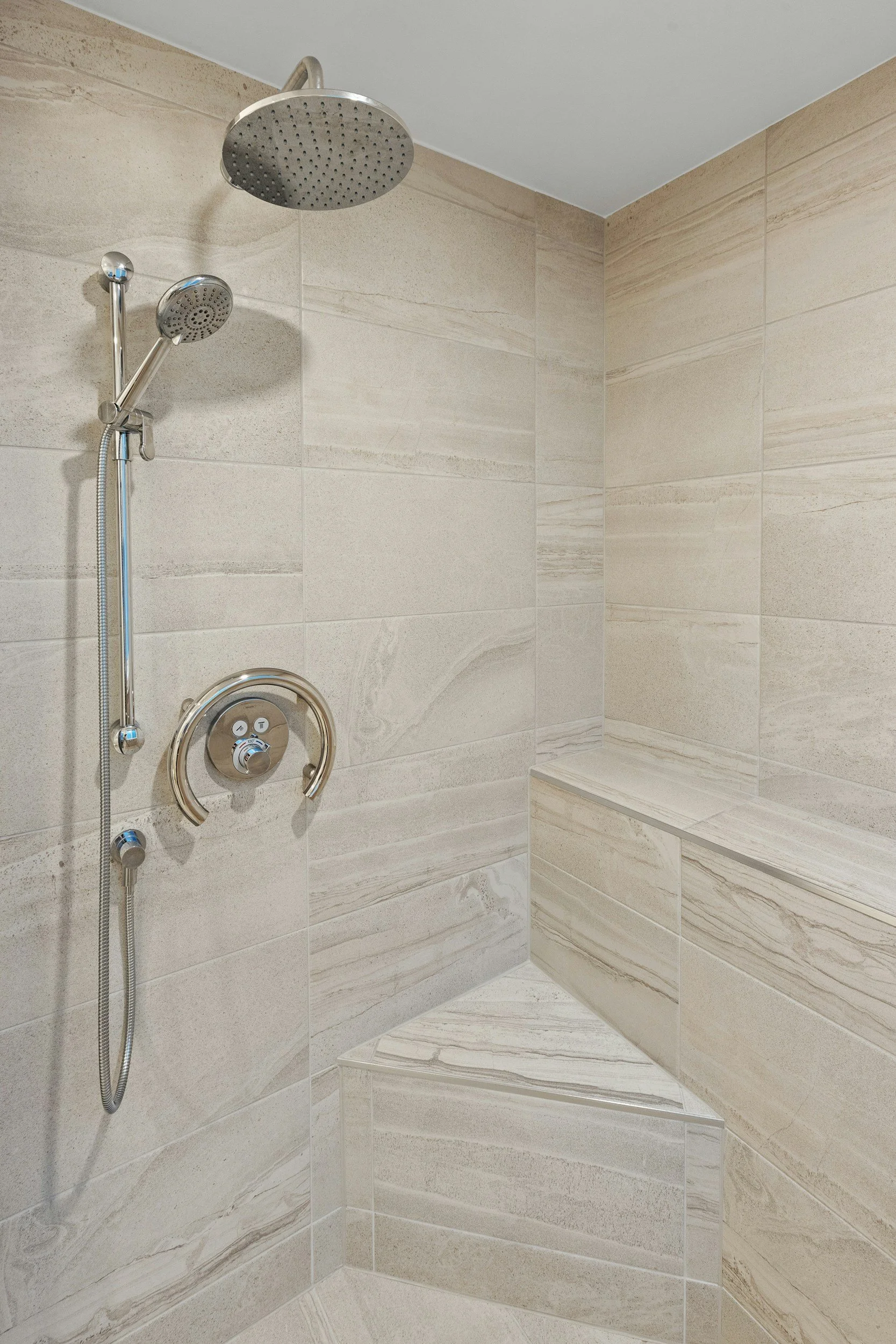
Roll-in showers represent the most common bathroom modification for wheelchair users and people with significant mobility limitations. These barrier-free showers eliminate the curb or threshold that prevents wheelchair access, allowing users to roll directly into shower areas.
Proper roll-in shower design requires careful attention to floor pitch for drainage, waterproofing that extends beyond typical shower installations, grab bar placement and blocking for support, and adequate turning radius for wheelchair maneuverability. These showers typically measure 5 feet by 3 feet minimum, though larger sizes provide better functionality.
Roll-under sinks allow wheelchair users to position themselves at sinks comfortably for tasks like washing hands, brushing teeth, or personal grooming. These require specific height mounting (typically 34 inches to sink rim), adequate knee clearance underneath (27 inches high, 30 inches wide, 19 inches deep minimum), insulated or protected pipes to prevent leg burns, and lever-style faucets operable with limited hand strength.
Toilet modifications often include comfort-height toilets mounted 17 to 19 inches high (compared to standard 15 inches), grab bars positioned according to ADA guidelines for transfer assistance, adequate clear floor space (60 inches diameter or 56 by 60-inch T-shaped space) for wheelchair maneuvering, and sometimes wall-mounted toilets allowing better positioning.
Door widening to 36-inch clear opening width accommodates wheelchairs and walkers that don't fit through standard 30 or 32-inch doors. This modification requires reframing door openings and potentially adjusting adjacent walls.
Eastern NC Service Areas We Cover
Plank Construction serves communities throughout eastern North Carolina including Pitt County, Craven County, Beaufort County, Lenoir County, and surrounding areas. We regularly complete accessibility projects in Greenville, Winterville, Ayden, Grifton, Farmville, Washington, New Bern, Kinston, and numerous smaller communities throughout the region.
Our familiarity with eastern NC building codes, permit requirements, and local building officials ensures smooth project approvals and inspections. We understand regional construction considerations including coastal flood requirements, soil conditions affecting foundation work, and climate factors influencing material choices.
Rural eastern NC properties sometimes present unique challenges including septic systems, well water, and older construction that requires creative solutions. Our experience with these situations means we can complete accessibility modifications even on properties where other contractors might struggle.
Working With Patient Care Coordinators
Patient care coordinators, case managers, and occupational therapists play crucial roles in accessibility modification projects. These professionals assess patients' needs, develop modification plans, coordinate insurance authorization, and ensure completed work meets patients' functional requirements.
We work collaboratively with care coordinators throughout projects, providing detailed estimates that match authorization requirements, communicating about timeline and scheduling to coordinate with patients' needs, accommodating pre-construction evaluations and site visits, and documenting work completion for insurance approval.
Understanding medical terminology and functional requirements helps us translate healthcare providers' recommendations into practical construction solutions. When therapists specify "roll-in shower with grab bars positioned for left-side transfer," we know exactly what configuration serves the patient's needs.
Our CAPS certification demonstrates specialized training in aging-in-place and accessibility design that care coordinators value. This credential signals understanding of how design choices affect function for people with various mobility limitations.
Timeline Expectations for Accessibility Projects
Bathroom accessibility modifications typically take 2 to 4 weeks from project start to completion, depending on scope and complexity. Roll-in shower installations alone require 1 to 2 weeks, while comprehensive bathroom renovations including shower, sink, toilet, and door modifications take 3 to 4 weeks.
Pre-construction steps including insurance authorization, contractor selection, design finalization, and permit approval often take 2 to 6 weeks before construction begins. Starting this process early helps meet patients' timeline needs, particularly when hospital discharge or rehabilitation completion dates drive urgency.
We prioritize accessibility projects understanding that delays can mean patients remaining in institutional settings longer or family members struggling with unsafe transfer and assistance situations. When possible, we expedite scheduling for medically urgent modifications.
However, quality work requires proper time for permits, material ordering, construction, and inspection. Rushing projects risks code violations or functional problems that defeat the modifications' purpose. Realistic timeline discussions during planning prevent disappointment.
Cost Considerations and Estimates
Roll-in shower installations in eastern NC typically cost $8,000 to $15,000 depending on size, tile choices, and complexity. This includes demolition of existing tub or shower, proper floor pitch and waterproofing, tile work, plumbing modifications, and grab bar installation.
Roll-under sink installations cost $1,500 to $3,500 including new sink and faucet, height-appropriate mounting, pipe protection, and any necessary counter modifications. Custom vanity work or extensive plumbing relocation increases costs.
Door widening projects cost $1,200 to $2,500 per door including reframing, new wider door and hardware, drywall repair, and painting. Structural considerations or challenging wall configurations increase complexity and cost.
Comprehensive bathroom accessibility renovations addressing multiple modifications simultaneously typically cost $12,000 to $25,000 depending on bathroom size and scope. These projects achieve better results than piecemeal modifications because we can coordinate all elements for optimal function and appearance.
We provide detailed estimates itemizing all work for insurance authorization and documentation requirements. Transparent pricing helps care coordinators and families understand costs and make informed decisions about scope.
Quality Standards for Accessibility Work
Accessibility modifications must meet specific standards to function properly and comply with codes. ADA (Americans with Disabilities Act) guidelines provide design standards even for residential projects, ensuring modifications actually serve users' needs rather than just appearing accessible.
Grab bar installation requires proper blocking behind walls capable of supporting 250+ pounds of force. Surface-mounted grab bars screwed into drywall fail under stress and create dangerous situations. We install proper blocking during construction or locate structural framing for secure mounting.
Roll-in shower waterproofing must extend beyond standard shower requirements because these installations involve larger areas and different water flow patterns. Proper membrane installation and testing prevents water damage that creates expensive repairs.
Floor pitch in roll-in showers must be adequate for drainage (typically 1/4 inch per foot minimum) while remaining safe for wheelchair users. Too little pitch causes standing water, while excessive pitch creates instability. Experienced contractors balance these requirements appropriately.
Navigating Insurance Documentation
Insurance-covered modifications require substantial documentation including detailed scopes of work describing all modifications, itemized cost estimates breaking down labor and materials, contractor credentials and license verification, photos of existing conditions, and sometimes architectural drawings for complex projects.
We provide documentation in formats insurance companies and patient care coordinators require, understanding that incomplete or incorrect paperwork delays authorizations and payments. Our experience with these processes helps projects move efficiently through approval steps.
Change order management becomes important when construction reveals unexpected conditions requiring scope modifications. We communicate promptly about needed changes, provide updated estimates, and coordinate authorization for additional work before proceeding.
Final documentation including completion photos, inspection certificates, and invoice details supports insurance payment and creates records for future reference. Thorough documentation also protects homeowners if questions arise about work quality or code compliance.
Beyond Bathrooms: Other Common Modifications
Ramp installation for wheelchair or walker access represents another frequent modification we complete. Proper ramp design requires appropriate slope (typically 1:12 ratio meaning 1 foot of ramp length for each inch of rise), adequate width (36 inches minimum), proper railings and edge protection, and landings at doors and slope changes.
Doorway modifications beyond widening might include lever-style handles replacing knobs, offset hinges gaining clearance without reframing, and threshold ramps or bevels eliminating barriers. These smaller modifications dramatically improve accessibility when combined with major bathroom work.
Kitchen modifications for wheelchair users include lowered counters or sinks, pull-out shelving for cabinet access, and open space under cooktops or sinks for knee clearance. These modifications are less common than bathroom work but sometimes authorized for comprehensive accessibility plans.
Bedroom access modifications might include closet reorganization with lowered rods and accessible storage, electrical outlet and switch relocation to reachable heights, and flooring changes from carpet to hard surfaces allowing easier wheelchair movement.
Why CAPS Certification Matters
Our CAPS (Certified Aging-in-Place Specialist) certification from the National Association of Home Builders represents specialized training in designing and building homes for aging populations and people with mobility challenges. This credential demonstrates knowledge of universal design principles, accessibility standards and best practices, fall prevention and safety considerations, and how physical limitations affect daily activities and home use.
CAPS professionals understand the difference between making homes technically accessible versus genuinely functional. This distinction matters enormously for people actually living with mobility challenges rather than just meeting code minimum requirements.
The certification also signals our commitment to serving aging and mobility-challenged populations professionally and respectfully. We understand that these projects involve vulnerability and life changes that require sensitivity beyond typical construction work.
Eastern NC Housing and Aging Population
Eastern NC's demographic trends create increasing demand for accessibility modifications. While Pitt County's median age of 34 is relatively young, the region's aging population and appeal to retirees means substantial numbers of residents will need accessibility modifications in coming years.
The data showing 76.9% of Pitt County residents moved to the area in 2010 or later includes many retirees choosing eastern NC for its affordability, climate, and quality of life. As these residents age in place, accessibility needs will increase.
Rural eastern NC communities often lack accessible housing options, making modifications to existing homes the only practical alternative to relocating away from established communities and support networks. Our work helps people remain in their homes and communities despite mobility challenges.
Getting Started With Your Accessibility Project
If you're a homeowner, family member, or patient care coordinator needing accessibility modifications in eastern NC, contact us to discuss your specific needs and timeline. We can schedule initial consultations to evaluate properties, discuss patients' functional requirements, and develop modification plans.
For patient care coordinators working with insurance authorization processes, we provide detailed estimates and documentation supporting approval requests. Our experience with these processes helps move projects efficiently from authorization through completion.
We understand that accessibility modifications often involve urgent timelines driven by hospital discharges or rehabilitation completions. We prioritize these projects and work to accommodate scheduling needs while maintaining quality standards.
At Plank Construction, our CAPS certification and experience throughout eastern NC position us to complete accessibility modifications that genuinely serve patients' needs while meeting insurance requirements and code standards.
Ready to discuss accessibility modifications for yourself, a family member, or a patient in your care? Contact Plank Construction for a consultation about bathroom accessibility, roll-in showers, and home modifications that enable safe, independent living throughout eastern North Carolina.