
7 Ways ADUs Increase Your Eastern NC Home Value (Plus 2 That Don't)
Wondering if an accessory dwelling unit will actually increase your property value in eastern North Carolina? Here's what the data shows about ADU impact on home values – including two common situations where ADUs might hurt rather than help.
When homeowners invest $80,000 to $120,000 building an ADU, they naturally wonder whether this expense will increase their property value or become a costly mistake. The answer in eastern North Carolina markets like Greenville, New Bern, and Washington isn't simple – ADUs can significantly boost property values in some situations while providing minimal benefit or even reducing appeal in others.
At Plank Construction, we build ADUs throughout eastern NC for families with various goals including increasing property value, generating rental income, and housing family members. Our experience shows that ADU impact on home values depends heavily on design quality, local market conditions, and how well the ADU fits your specific property and neighborhood.
Let's explore the seven ways ADUs increase eastern NC home values and the two situations where they don't provide the value boost homeowners expect.
Understanding Eastern NC's Housing Market Context
Before examining ADU value impact, understanding Greenville and eastern NC's housing market provides essential context. According to recent data from the Greenville-ENC Alliance, the Greenville MSA consistently ranks among the top 3 most affordable metro areas in North Carolina, with 2024 median home sale prices of $229,000 compared to the U.S. median of $412,500.
Pitt County's population reached 180,783 in 2024 and continues growing, with 76.9% of residents moving to the area in 2010 or later. This population growth fuels housing demand, with nearly 5,000 new construction housing units permitted since 2020. The market shows 1,560 permits in 2023 and 1,360 in 2024, with forecasts of 1,130 permits for 2025.
Owner-occupied units account for 53.6% of Pitt County housing, while renter-occupied units represent 46.4%. This balanced market creates demand for both owner-occupied homes and rental housing, providing multiple potential buyers when properties with ADUs eventually sell.
Housing prices have stabilized after the 2020-2022 surge, with both median list prices and sale prices flattening over the previous two years. This stable market provides good conditions for assessing ADU value impact without the distortion of rapidly changing prices.
Way #1: Direct Square Footage Addition
ADUs add 400 to 800 square feet of finished living space to properties, and this additional square footage directly increases property value in most eastern NC markets. While ADU square footage doesn't command the same per-square-foot value as primary residence space, it still contributes meaningful value.
In Greenville's market where median cost per square foot runs approximately $158 according to recent FRED Housing Inventory data (compared to $219 in North Carolina overall), a 600-square-foot ADU might add $60,000 to $75,000 in appraised value even though construction cost $90,000 to $110,000.
This seems like poor return until you consider that the same investment in primary residence renovations also rarely returns 100% of cost. Kitchen remodels typically return 60% to 80% of investment, bathroom renovations return 55% to 70%, and additions return 50% to 75%. ADU returns of 65% to 85% compare favorably with other home improvement investments.
The value calculation improves when considering ADU rental income potential. Properties generating $900 to $1,300 monthly from ADU rentals in eastern NC markets attract investor buyers who calculate value based on income potential rather than just square footage.
Way #2: Income Property Appeal to Investors
ADUs transform single-family homes into income-producing properties that appeal to real estate investors alongside traditional homebuyers. This expanded buyer pool increases demand and supports higher sale prices.
Investment buyers calculate property value differently than owner-occupants. They focus on rental income potential and return on investment rather than emotional factors like kitchen aesthetics or backyard size. A property producing $1,100 monthly from an ADU plus $1,600 from the main house generates $2,700 total monthly income that justifies premium pricing.
Using typical investor calculations, properties generating $32,400 annually from combined rental income might command $50,000 to $80,000 premiums over comparable properties without rental income potential. Investors accepting 6% to 8% capitalization rates will pay substantially more for income-producing properties than non-income alternatives.
Greenville's strong rental market driven by East Carolina University, Vidant Medical Center, and growing employment (with owner-occupied units keeping pace with employment increases according to recent data) creates consistent tenant demand that investors value highly.
Way #3: Multigenerational Housing Demand
Demographic trends show increasing multigenerational living across the country and in North Carolina specifically. ADUs perfectly serve families needing space for aging parents, adult children, or extended family members while maintaining everyone's independence and privacy.
Properties with existing ADUs appeal to buyers facing these exact situations who recognize the value immediately. Rather than needing to build an ADU after purchasing (investing additional $80,000 to $120,000), buyers can move in with housing solutions already in place.
Pitt County's demographic mix with a median age of 34 (several years below the national median) creates substantial demand for flexible housing. The 21.5% of the population under 18 years represents families who might need housing for aging grandparents helping with childcare. The 16.7% aged 18 to 24 includes college students and young adults who might return home temporarily.
The aging baby boomer population nationally and locally creates increasing demand for aging-in-place solutions. Properties with ADUs suitable for live-in caregivers or aging parents who need nearby family support command premiums from buyers in this demographic.
Way #4: Flexibility for Changing Needs
ADUs provide housing flexibility that appeals to buyers thinking long-term about how their needs might change over decades of homeownership. This flexibility represents real value that justifies premium pricing.
A property with an ADU serves multiple purposes over time. The space that houses an aging parent today might become rental income tomorrow, then housing for an adult child next year, then a home office or guest quarters years later. This adaptability means buyers don't need to guess their exact future needs – the ADU handles various situations.
Eastern NC's growing population with 22.9% of residents arriving in 2023 or later means many buyers are transplants without established local family networks. These buyers particularly value ADU flexibility because they might need housing for visiting family from other states, temporary housing during job transitions, or rental income to offset mortgage costs.
The balanced 53.6% owner-occupied to 46.4% renter-occupied housing split in Pitt County shows buyers understand both ownership and rental perspectives. ADUs bridge these worlds by allowing owner-occupants to generate rental income without becoming full-time landlords managing separate properties.
Way #5: Addressing Housing Shortages
The Greenville MSA ranks among the top 5 North Carolina metro areas for housing demand as measured by occupied housing units in proportion to population. With 225 owner-occupied units and 195 renter-occupied units per 1,000 residents, the market shows strong housing demand relative to supply.
ADUs help address this demand by adding housing units without requiring large-scale development or infrastructure investment. Properties contributing to housing supply through ADUs align with community needs and policy trends encouraging accessory dwelling unit development.
Proposed North Carolina Senate Bill 495 would mandate that local governments allow at least one ADU on every single-family residential property. While not yet law, this legislative direction signals policy support for ADUs that increases their long-term value proposition. Properties with existing ADUs position ahead of potential regulatory changes.
The data showing housing permits of 1,560 in 2023 and 1,360 in 2024 (with forecasts of 1,130 in 2025) demonstrates continued development, but this supply still trails population growth demand. Properties with ADUs effectively add housing units that markets need.
Way #6: Quality Design Enhancing Overall Property
Well-designed ADUs that complement primary residence architecture and enhance overall property aesthetics increase value beyond just additional square footage. Professional design and quality construction create cohesive properties that appeal more than those with poorly executed additions.
In eastern NC where median home sale prices have stabilized at affordable levels ($229,000 in Greenville compared to $412,500 nationally), quality improvements stand out significantly. A thoughtfully designed ADU with appropriate materials, complementary architectural style, and professional execution elevates the entire property's perceived value.
Properties where ADUs match or exceed primary residence quality in finishes and construction demonstrate pride of ownership and thorough maintenance that buyers value highly. This halo effect means the ADU's presence signals overall property quality that justifies premium pricing.
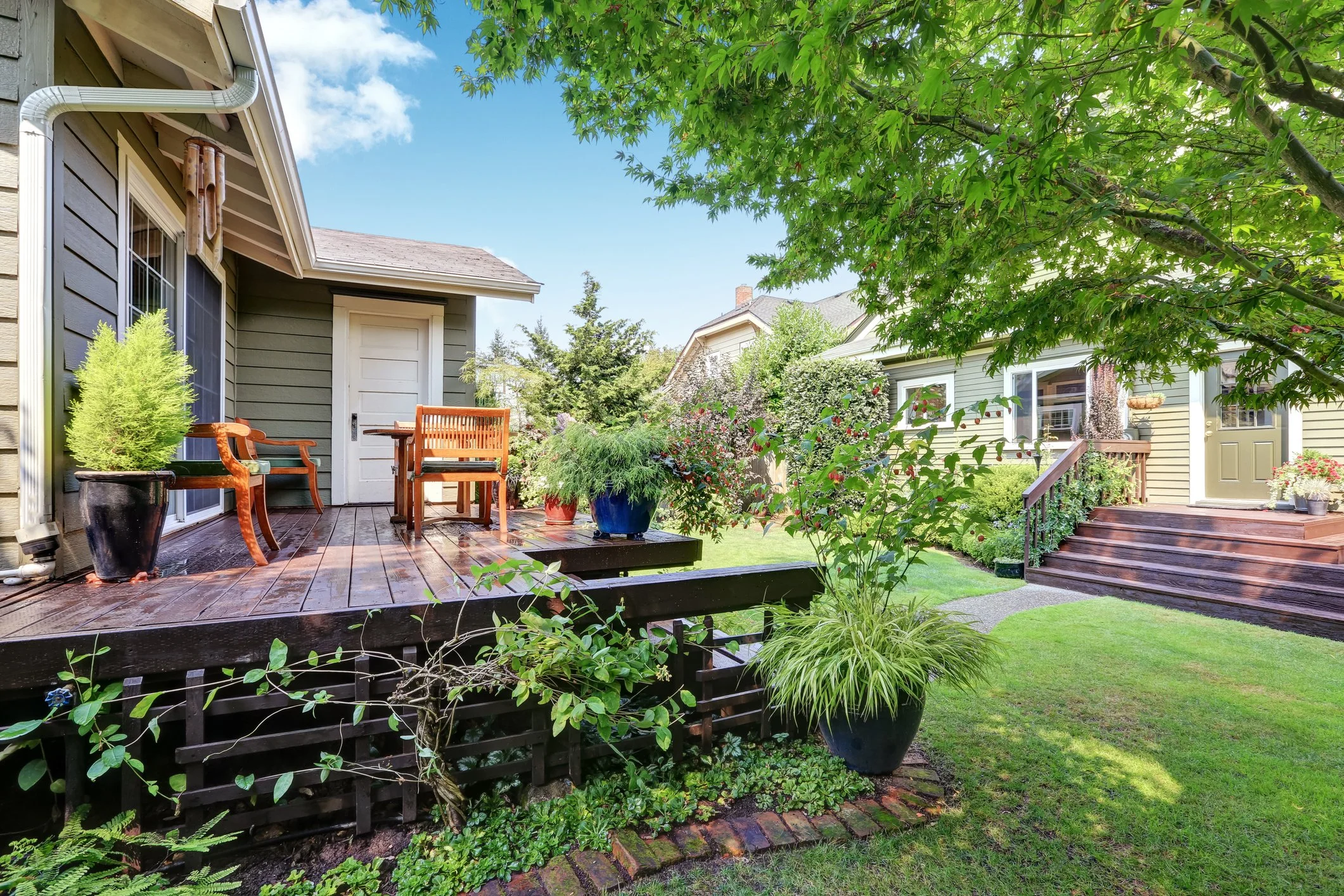
Landscaping integration around ADUs, covered porches or patios connecting spaces, and outdoor areas designed for privacy create resort-like properties that command attention in competitive markets. These properties photograph well for listings and create memorable impressions during showings.
Way #7: Reduced Days on Market
Properties offering unique features like ADUs often sell faster than comparable homes without these amenities. While faster sales don't directly increase value, they reduce carrying costs, minimize price reduction risk, and demonstrate strong market appeal.
In Greenville's market where active listings increased 43% from July 2024 through July 2025 (faster than the national median of 20%), properties with distinctive features that attract serious buyers stand out from increasing competition. ADUs provide this differentiation.
Faster sales benefit sellers through reduced mortgage payments during marketing periods, lower utility and maintenance costs while homes sit vacant, and decreased risk of market condition changes affecting sale prices. A property selling in 30 days versus 90 days saves two months of carrying costs while capitalizing on current market conditions.
Multiple potential buyer types (multigenerational families, investors, remote workers needing home offices, families with adult children) create broader appeal that translates to more showings, more offers, and faster sales at better prices.
What ADUs Don't Increase: Situation #1 – Poor Quality Construction
Poorly executed ADUs that look cheap, don't match the primary residence, or show obvious construction shortcuts actually hurt property values rather than helping. These create perception problems that affect the entire property's marketability.
Budget ADUs with mismatched siding, obviously cheaper materials than the main house, awkward layouts, or unprofessional finishes signal overall property issues to buyers. Rather than seeing value-adding amenities, buyers wonder what other shortcuts were taken and whether the ADU meets code requirements.
ADUs that look like afterthoughts rather than planned improvements create aesthetic problems that hurt curb appeal and property photography. Homes that don't photograph well online receive fewer showings regardless of actual features.
The eastern NC market's affordability (with cost per square foot at $158 compared to $219 statewide) means buyers expect reasonable quality for reasonable prices. Obviously cheap construction stands out negatively in markets where baseline quality expectations exist.
Unpermitted ADUs or those built without proper code compliance create legal and financing obstacles that can prevent sales entirely. Buyers using conventional financing often can't close on properties with unpermitted structures, dramatically limiting the buyer pool and reducing sale prices.
What ADUs Don't Increase: Situation #2 – Over-Improvement for the Neighborhood
ADUs can represent over-improvements in neighborhoods where most homes lack similar features and where property values don't support the investment. Building a $100,000 ADU on a $180,000 property in a neighborhood where homes sell for $170,000 to $200,000 creates value recovery problems.
The appraisal principle of conformity means properties that significantly exceed neighborhood norms in features or price don't achieve full value for improvements. A property worth $280,000 based on improvement cost in a neighborhood where nothing sells above $220,000 won't appraise for its full value.
Greenville's median home price of $229,000 provides context for appropriate ADU investment. Adding $100,000 ADUs to $200,000 properties in $180,000 to $240,000 neighborhoods makes sense. Adding the same ADUs to $150,000 properties in $140,000 to $170,000 neighborhoods creates over-improvement situations.
Markets matter significantly. ADUs add more value in growing areas experiencing population and employment increases than in declining areas where housing demand weakens. Pitt County's continued growth and employment-to-housing-unit alignment supports ADU value, but specific neighborhoods vary.
Maximizing ADU Value Impact
To ensure your eastern NC ADU investment increases property value rather than becoming expensive mistake, focus on quality construction that matches or slightly exceeds primary residence standards. Professional design and execution matter more than luxury features for value impact.
Appropriate sizing relative to the main house maintains property balance. ADUs should be smaller than primary residences (typically 30% to 50% of main house size) while large enough to function well. A 600-square-foot ADU works well with a 1,400-square-foot main house but might overwhelm a 900-square-foot cottage.
Design ADUs for multiple potential uses rather than single-purpose spaces. Flexible layouts that work equally well for aging parents, adult children, rental income, or home offices appeal to broader buyer pools and demonstrate versatility that buyers value.
Include accessibility features like wider doorways, curbless showers, and grab bar blocking during construction. These features cost minimally upfront but appeal to aging-in-place buyers and demonstrate thoughtful design that enhances value perception.
Obtain all required permits and ensure code compliance throughout construction. Permitted, inspected work provides documentation that facilitates sales and financing while avoiding legal problems that can derail transactions.
Understanding Appraisal Challenges
ADUs present unique appraisal challenges because comparable sales data remains limited in many eastern NC markets. Appraisers struggle to value ADUs when few similar properties have sold recently in the area.
Some appraisers treat ADUs primarily as square footage additions, applying per-square-foot values that don't capture income potential or flexibility benefits. Others recognize income property characteristics and apply investment property valuation methods that better reflect ADU value.
Working with appraisers experienced with investment properties and ADUs helps achieve fair valuations. Providing documentation of rental income, comparable ADU properties in broader geographic areas, and construction cost records supports higher appraisals.
Refinancing properties with ADUs sometimes yields higher appraisals than purchase appraisals because the ADU's rental income history demonstrates actual value rather than theoretical potential.
Long-Term Value Considerations
ADU value impact extends beyond immediate resale value to include ongoing benefits during ownership. Monthly rental income of $900 to $1,300 in eastern NC markets provides $10,800 to $15,600 annually that compounds over years of ownership.
Properties with ten years of ADU rental income at $1,100 monthly generate $132,000 in gross rent over that period. Even after expenses, this income substantially exceeds typical ADU construction costs while the owner still retains the property and its appreciation.
The flexibility to house family members when needed while generating income when not provides options that pure financial calculations don't capture. This optionality has real value that becomes apparent during life transitions.
At Plank Construction, we help eastern NC families design ADUs that maximize property value while serving immediate family needs. Our experience shows that quality construction, appropriate sizing, and thoughtful design create ADUs that enhance property values substantially.
Ready to explore whether ADU construction makes financial sense for your eastern NC property? Contact Plank Construction for a consultation about designing ADUs that increase property value while serving your family's needs in Greenville, New Bern, or surrounding communities.