
The Boomerang Generation: Why Your Eastern NC Home Needs Flexible Living Space
Adult children moving back home? You're not alone. Here's how in-law suites and ADUs help eastern North Carolina families navigate housing affordability challenges while maintaining everyone's independence and dignity.
The phone call starts hesitantly. Your adult child explains that rent has become unaffordable, student loans are crushing, or a job situation changed unexpectedly. They need to move back home, temporarily of course, just until they get back on their feet. You want to help, but the idea of everyone living on top of each other in your three-bedroom house feels overwhelming.
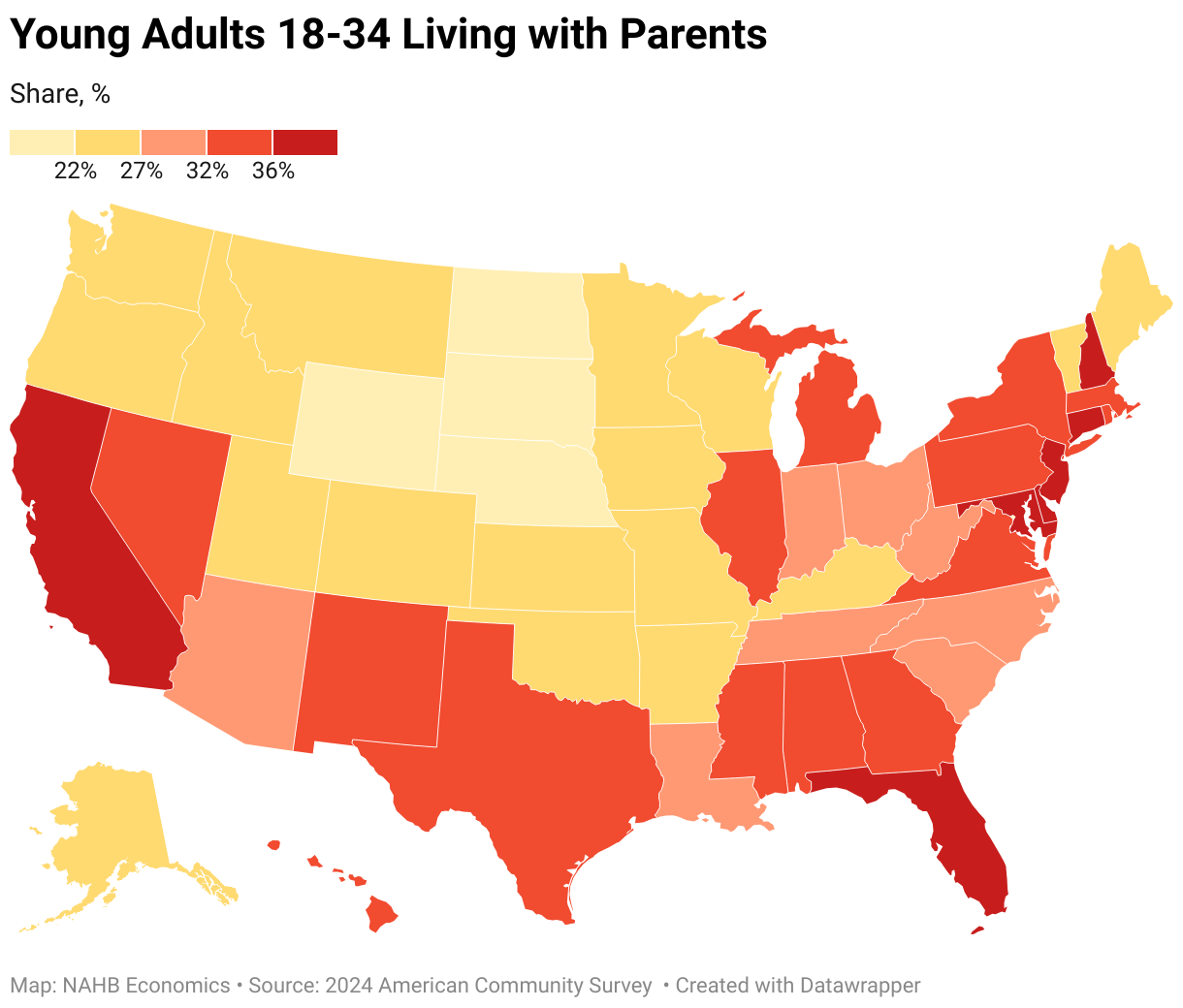
You're far from alone in this situation. Nearly a third of adults ages 18-34 lived with their parents in 2024 according to the most recent American Community Survey, an increase from 31.8% in 2023. nahb Housing affordability is driving this trend, and eastern NC families are discovering that in-law suites and ADUs provide solutions that help adult children while maintaining sanity for everyone involved.
At Plank Construction, we build in-law suites and ADUs for families throughout eastern North Carolina who are navigating exactly this situation. These spaces provide the independence adult children need to maintain dignity while giving parents the boundaries necessary for healthy family relationships.
Let's explore how flexible living spaces address the boomerang generation challenge and why this trend matters for your home planning.
Why Adult Children Are Moving Back Home
Statistical analysis confirms a clear link between prohibitively expensive housing, especially rentals, and the high prevalence of young adults residing with their parents, with states having higher shares of renters paying 30 percent or more of their income on housing registering higher shares of young adults living with parents. eyeonhousing
Student loan debt burdens many young adults with monthly payments that consume significant portions of income before rent, utilities, and food enter the picture. The median student loan payment of $200 to $400 monthly might seem manageable in theory but becomes crushing when combined with $1,200 apartment rent.
Entry-level wages haven't kept pace with housing costs in most markets. Young professionals earning $35,000 to $45,000 annually struggle to afford $1,000+ monthly rents that exceed the 30% of income housing affordability standard. What previous generations could afford easily now requires financial gymnastics or parental support.
Career transitions and job market challenges create temporary setbacks that drain savings quickly. Layoffs, industry disruptions, or career changes that seemed wise long-term create immediate financial strain that makes maintaining independent housing impossible.
Relationship changes including divorce or breakup of cohabiting partnerships suddenly transform affordable two-income households into unaffordable single-income situations. Adult children facing these transitions often need temporary housing while rebuilding financial stability.
The Challenge of Multigenerational Living in Standard Homes
Sharing standard homes creates friction that strains even the best family relationships. Privacy disappears when adult children sleep in childhood bedrooms and everyone shares one bathroom, one kitchen, and common spaces designed for nuclear families rather than multiple adults with different schedules.
Different lifestyles and schedules inevitably conflict. Parents accustomed to quiet evenings clash with adult children working night shifts or maintaining active social lives. Morning routines become battlegrounds when multiple adults compete for bathrooms and kitchen access.
Household management disagreements arise around cleaning standards, food storage, utility usage, and space allocation. Who's responsible for what becomes unclear when adult children aren't quite guests but aren't quite independent either.
Dating and social life complications affect adult children whose dating prospects dim when they must explain living with parents. Privacy for romantic relationships becomes impossible in standard homes, affecting both adult children's dignity and parents' comfort.
Financial arrangements remain awkward in shared living situations. Should adult children pay rent? Contribute to groceries? Handle their own meals? These conversations create discomfort that festers when left unaddressed.
How In-Law Suites and ADUs Solve the Problem
Separate living spaces with their own entrances, kitchens, and bathrooms transform multigenerational living from stressful to workable. Adult children maintain independence and dignity while parents preserve their lifestyle and boundaries.
Privacy benefits everyone when adult children have dedicated space for sleeping, working, socializing, and managing their lives. Parents no longer worry about what's happening in their living room at 2 AM, and adult children don't feel like teenagers sneaking in past curfew.
Independent kitchens eliminate the meal coordination burden and food storage conflicts. Adult children manage their own groceries, cooking schedules, and cleanup without affecting parents' routines or preferences.
Separate entrances allow different schedules without disruption. Adult children working evening shifts or maintaining active social lives come and go without waking parents or explaining their whereabouts.
Clear boundaries become possible when physical separation exists. In-law suites create natural delineation between "your space" and "my space" that prevents the boundary confusion common when everyone shares one house.
Financial Benefits for Both Generations
In-law suites cost less than ongoing rent subsidies for many families. Rather than helping adult children pay $1,000 monthly rent elsewhere, families can invest $60,000 to $100,000 in permanent housing that serves multiple purposes over time.
Building equity in family property beats throwing money at rent payments. The $12,000 to $15,000 annually parents might spend subsidizing children's rent could instead fund construction financing that creates lasting property value.
Shared expenses benefit everyone when adult children contribute reasonable amounts toward utilities and property costs without paying market rent rates. This arrangement helps adult children save money while compensating parents for increased expenses.
Faster savings accumulation allows adult children living in in-law suites to build down payment funds or pay off debt more quickly than if paying full market rent elsewhere. The arrangement serves as wealth-building opportunity rather than dependency trap.
Tax considerations sometimes allow parents to treat in-law suite occupancy as rental arrangement with associated deductions. Consult tax professionals about whether your specific situation qualifies for these benefits.
Design Features That Work for Adult Children
Full kitchens rather than kitchenettes provide genuine independence. Adult children managing their own meal planning, grocery shopping, and cooking maintain life skills and autonomy rather than depending on parents for food.
Modern amenities including quality internet, adequate electrical outlets, and space for home offices accommodate remote work that many young adults now manage. In-law suites designed as functional workspaces serve dual purposes as housing and home offices.
Separate entrances provide independence and privacy that matters enormously for adult children's dignity and dating life. Coming and going without walking through parents' living spaces makes living arrangements feel less like returning to childhood.
Sound isolation between in-law suite and main house allows everyone to maintain their preferred lifestyle without disturbing each other. Proper insulation and solid-core doors prevent noise transfer that creates tension.
Adequate storage including closets and general storage space allows adult children to actually live in the space rather than treating it as temporary crash pad. Being able to unpack fully and settle in reduces the feeling of limbo.
Eastern NC Cost Expectations
In-law suite construction in eastern NC typically costs $50,000 to $120,000 depending on size, approach, and finishes. This investment provides permanent housing solution rather than ongoing expense.
Garage conversions offer the most affordable path at $30,000 to $55,000 for families with suitable existing structures willing to sacrifice parking for living space. These conversions create functional in-law suites quickly and economically.
Attached additions of 400 to 600 square feet typically cost $60,000 to $90,000 in eastern NC markets. These provide comfortable living spaces connected to main houses through covered breezeways or interior doors.
Detached ADUs of 500 to 800 square feet usually run $80,000 to $120,000 but provide maximum independence and flexibility. These standalone structures work particularly well for adult children who value privacy and separation.
The investment timeline often aligns with how long adult children need parental housing support. If your child needs 2 to 3 years to stabilize financially, paying $1,000 monthly rent elsewhere costs $24,000 to $36,000 with nothing to show for it. Building a $70,000 in-law suite creates asset that serves multiple purposes after your child moves out.
When Adult Children Eventually Move Out
The beauty of in-law suites is their flexibility after adult children regain independence and move out. Unlike money spent on rent elsewhere, your investment continues serving purposes.
Rental income provides ongoing returns when adult children no longer need the space. Quality in-law suites in eastern NC rent for $800 to $1,400 monthly, creating income streams that help recoup construction investment.
Guest quarters for visiting family and friends provide comfortable accommodations without the awkwardness of sharing main house space. In-law suites become favorite visiting spots that encourage more frequent family gatherings.
Home office space serves growing numbers of remote workers who need dedicated workspace separate from household chaos. The in-law suite that housed your adult child becomes your perfect home office.
Future aging-in-place housing provides flexibility as your own needs change. The space built for your adult child might eventually house you if health changes make main house stairs problematic, or house caregivers who help you age in place.
Housing for aging parents becomes possible when your own parents need nearby support. The cycle continues with spaces built for one generation serving another's needs later.
Addressing the Stigma
Adult children moving home face unfair judgment from society that views this as failure rather than recognizing economic realities. In-law suites help combat this stigma by providing legitimately independent housing rather than childhood bedroom occupancy.
Having separate address or entrance helps adult children maintain professional image. Being able to give business contacts, dates, or friends an address for "the cottage" or "the studio" rather than parents' main house address preserves dignity.
The independence that in-law suites provide demonstrates adult children aren't mooching but rather strategically using family resources while building financial stability. There's significant difference between sleeping in childhood bedroom versus maintaining independent household on family property.
Temporary arrangements feel more acceptable when they're clearly temporary. In-law suites with leases, rent contributions, or clear timelines help everyone understand the arrangement as strategic rather than dependency.
Setting Healthy Boundaries
Clear expectations established before construction prevents conflicts later. Discuss financial contributions, maintenance responsibilities, guest policies, and how you'll handle situations if the "temporary" arrangement extends longer than anticipated.
Written agreements even between family members clarify responsibilities and expectations. Having document explaining rent contributions, utility payments, maintenance duties, and expected timelines prevents misunderstandings.
Regular check-ins about the arrangement allow course corrections before resentment builds. Monthly or quarterly conversations about how things are working give everyone opportunity to voice concerns and adjust arrangements.
Respecting independence means treating adult children as tenants rather than teenagers. Separate spaces should mean separate lives – no unannounced visits to in-law suites and mutual respect for privacy.
Planning for Multiple Scenarios
In-law suites provide flexibility for various family situations beyond returning adult children. The same space that houses your daughter during career transition might later house your aging father or provide rental income during empty-nest years.
Building quality space with multiple potential uses ensures long-term value. Design choices that work for various occupants – accessibility features, flexible layouts, quality finishes – maximize adaptability.
Location on property affects future uses. In-law suites with easy access work better for aging parents with mobility challenges, while more private locations suit adult children or renters preferring separation.
At Plank Construction, we help eastern NC families design flexible spaces that serve immediate needs while providing options for future situations. Our experience with multigenerational housing ensures designs that work well for various occupants over time.
Getting Started
If you're currently supporting adult children financially or anticipate this situation, exploring in-law suite options now provides proactive solution rather than reactive scramble when your child calls needing to move home.
Honest family conversations about expectations, timelines, and financial arrangements should happen before construction begins. These discussions prevent conflicts and ensure everyone understands the arrangement.
Property evaluation determines feasibility based on lot size, zoning, utilities, and other factors affecting construction options. Understanding what's possible helps you decide whether in-law suite construction makes sense.
Budget planning including comparison of construction costs versus ongoing rent subsidy helps families understand true financial picture. Often the numbers strongly favor building over years of rent payments.
Ready to explore in-law suite or ADU options for your eastern NC property? Contact Plank Construction for consultation about creating flexible living space that serves your family through changing needs while preserving everyone's independence and dignity.
Plank Construction specializes in in-law suites and ADUs throughout eastern North Carolina. Our experience with multigenerational housing helps families create spaces that work well for adult children, aging parents, or whatever life brings next. Contact us today to discuss your flexible housing needs.